
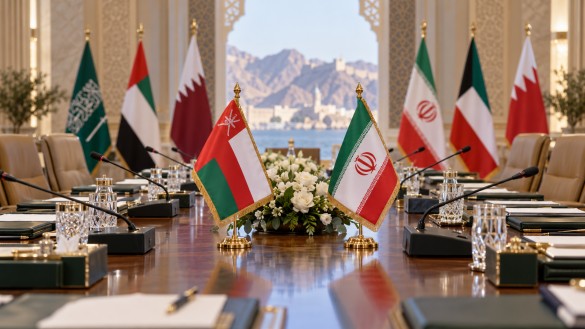
Oman’s Foreign Minister Badr Albusaidi has advocated for a regional security agreement that includes the six Gulf states, Iran, and Iraq, as a strategy to foster peace and stability in the Middle East. Speaking at Girton College, Cambridge, Albusaidi emphasized the importance of regional countries assuming greater responsibility for their own security, rather than relying heavily on the United States.
Albusaidi pointed out that Iran’s exclusion from previous regional security arrangements has exacerbated tensions and hindered conflict resolution efforts. He proposed a non-aggression pact among these nations, highlighting the need for dialogue and collective responsibility to address persistent security challenges in the region.
The call for regional cooperation comes amid ongoing discussions among senior officials from Türkiye, Pakistan, and Saudi Arabia in Tehran, focusing on regional security and preventing renewed conflict between the United States and Iran. These talks also consider future security frameworks for the Middle East.
Albusaidi underscored the significance of resolving disputes affecting the Strait of Hormuz, a crucial maritime route for global energy shipments. He argued that neighboring countries should collaborate to ensure maritime security and prevent further escalation of tensions.
He also mentioned that prior negotiations between Washington and Tehran, mediated by Oman, had shown promising progress towards an agreement. Nevertheless, ongoing regional tensions, marked by attacks on infrastructure and the risk of military confrontation, pose challenges for Gulf countries as they navigate their relationships with both Iran and the United States.
While Albusaidi’s proposal for a regional security pact aims to promote diplomacy and regional cooperation, it faces potential obstacles. Longstanding mistrust, Iran’s military activities, and concerns over security threats among neighboring countries present significant hurdles. Any meaningful agreement would likely require extensive negotiations and assurances from all involved parties.
Oman continues to play a pivotal role in encouraging diplomatic efforts and fostering regional collaboration as Middle Eastern countries seek to reduce tensions and establish a more autonomous framework for collective security.