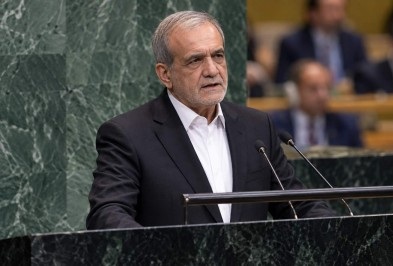
Iranian President Masoud Pezeshkian extended an olive branch for diplomacy with the United States while addressing the United Nations General Assembly, despite voicing strong criticism against U.S. President Donald Trump. Pezeshkian emphasized Iran’s willingness to engage in negotiations but firmly rejected any talks conducted under military or economic coercion.
The Iranian leader’s comments followed Trump’s statement at the UN, where the U.S. president hinted at potential further actions against Iran but also acknowledged the possibility of renewed dialogue. The backdrop to these developments included a significant three-hour meeting between Iranian Foreign Minister Abbas Araghchi and U.S. special envoy Steve Witkoff, mediated by Qatar, which focused on Iran’s terms for easing tensions.
Pezeshkian reiterated Tehran’s position on maintaining a peaceful nuclear program, distancing Iran from aspirations of developing nuclear weapons. He urged regional cooperation on security issues, cautioning against reliance on external powers. A pivotal topic in these discussions has been the strategic Strait of Hormuz, a critical waterway for global shipping that has faced disruptions amid heightened tensions.
Iran has stipulated that the reopening of the Strait of Hormuz hinges on the cessation of military threats and economic sanctions. Additionally, Iranian officials demanded the lifting of the naval blockade, financial pressure, and the release of Iranian assets frozen abroad as conditions for dialogue.
Accusing the United States and Israel of aggressive postures, Pezeshkian defended Iran’s actions as measures of self-defense in response to escalating economic pressures and hurdles in oil exports due to ongoing sanctions. Despite these significant barriers, the recent diplomatic interactions suggest that avenues for talks remain open between Washington and Tehran, even as they navigate complex issues surrounding the nuclear program and regional security.