
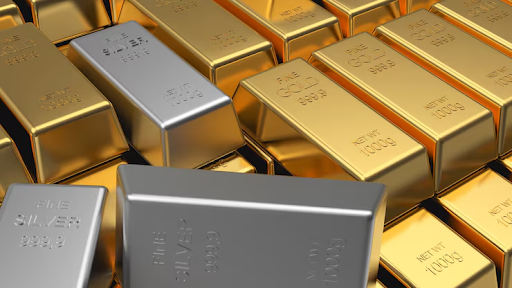
Monday’s trading session brought significant stabilization to precious metals after extreme price swings that had rattled investors worldwide. Gold prices advanced from an 8% plunge to $4,465 per ounce, climbing to $4,700 though still down 3.5%. Last week’s trading had seen the yellow metal approaching $5,600.
Silver markets followed comparable patterns, rebounding from a 7% fall after Friday’s extraordinary 30% drop to reach $79.60 per ounce. The partial recovery in metals prices contributed to Britain’s blue-chip stock index achieving a landmark milestone, surpassing 10,300 for the first time and settling at 10,341 points after touching 10,345 intraday.
Both precious metals had been climbing relentlessly as market participants sought protection from escalating global conflicts and worries about Federal Reserve political autonomy. The shift initiated Friday when leadership revealed Kevin Warsh as its choice for Fed chair, a former governor known for his expertise and institutional knowledge. If confirmed, Warsh will replace the incumbent when his term expires in May.
Market experts interpret the selloff as market confidence that partisan considerations won’t dominate monetary policy decisions. According to Susannah Streeter at Wealth Club, Warsh’s extensive Federal Reserve experience indicates resistance to external pressure, triggering the major repositioning away from safe-haven assets. Pepperstone’s Michael Brown described the Friday movement as a comprehensive “meltdown in the metals space.”
Energy markets and cryptocurrencies reflected changing sentiment, with bitcoin recovering 1.8% while remaining below $80,000, and oil prices falling 4% to about $65.24 per barrel on easing geopolitical tensions. Analysts explained the movement cleared extremely crowded trading positions, with metrics falling substantially from extreme levels, while both metals retain impressive gains compared to last year, with gold up 65% and silver surging more than 120%.