
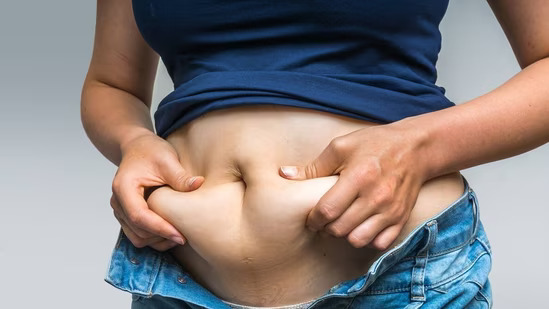
Health experts are emphasizing the significance of fat location on the body, highlighting its impact on overall health and disease risk. While traditional measures like Body Mass Index (BMI) have been used to gauge a person’s health, the distribution of fat provides a clearer picture of potential health threats. Specifically, fat accumulating around the abdomen is seen as more dangerous compared to fat in other areas like the arms or thighs due to its effects on vital organs and metabolic processes.
The body contains two primary types of fat: subcutaneous and visceral. Subcutaneous fat sits just beneath the skin and can be found in regions such as the thighs, hips, arms, and lower abdomen, often identified by its pinchable nature. In contrast, visceral fat is buried deep within the abdominal cavity, enveloping essential organs like the liver, pancreas, and intestines. While both fats can pose health concerns, visceral fat carries a notably higher risk due to its metabolic activity.
Visceral fat’s danger lies in its active metabolic role, as it releases fatty acids and inflammatory chemicals into the bloodstream, disrupting normal bodily functions. This activity can lead to increased insulin resistance, elevated blood sugar levels, abnormal cholesterol, higher blood pressure, and additional liver strain. Over time, these disruptions can result in severe health conditions such as type 2 diabetes, fatty liver disease, coronary artery disease, hypertension, and metabolic syndrome.
It’s also crucial to note that a normal BMI doesn’t always equate to good health. Some individuals may maintain a healthy weight yet still harbor excessive visceral fat. Consequently, healthcare providers are increasingly using waist circumference and waist-to-height ratios alongside BMI to better assess health risks, offering a more precise understanding of abdominal obesity and its hidden metabolic dangers.
To reduce visceral fat, lifestyle modifications are necessary. Incorporating regular aerobic exercises like walking, cycling, and swimming can help burn surplus fat, while resistance training supports muscle mass and enhances glucose regulation. Diet is equally important, with experts advising the reduction of ultra-processed foods, sugary drinks, and refined carbohydrates, all of which contribute to visceral fat buildup. Additionally, maintaining a consistent sleep schedule and managing stress are vital, as high cortisol levels can promote fat storage in the abdominal area. While excess fat in any body part warrants attention, abdominal fat demands special focus due to its strong association with chronic diseases. Emphasizing healthy eating, regular physical activity, quality sleep, and waist monitoring can significantly reduce visceral fat and improve long-term health outcomes.